The UK Space Agency is backing seven new projects that will use satellite data to help organisations understand, manage and respond to climate risks, supporting the continued growth of the UK’s climate services sector.
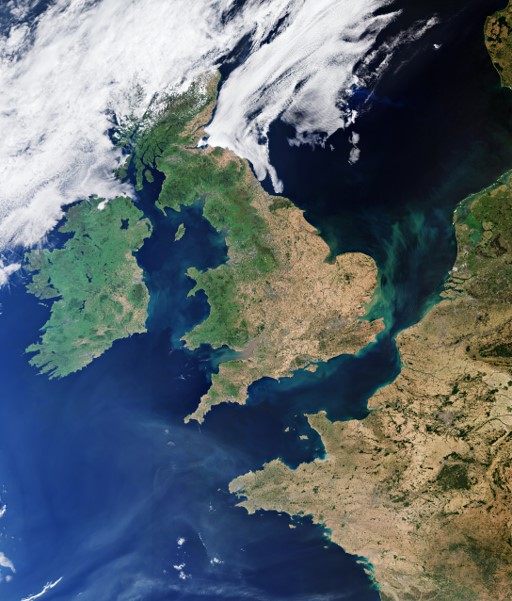
Funded through the Commercial Climate Services Call 4 with a combined investment of £500,000, the seven projects will develop practical, market-focused services that turn Earth observation data into insights for housing providers, investors, infrastructure owners, planners, farmers and public health decision-makers.
The latest call builds on the UK Space Agency’s work to help organisations transform satellite-derived information into commercial services that support economic growth, climate adaptation and national resilience.
Climate change is creating new risks for communities, infrastructure, industry and nature. The successful projects show how UK organisations are using space data to build services that help customers make better decisions, target investment and plan for the future.
Beth Greenaway, UK Space Agency’s Head of Earth Observation Delivery, said:
“The UK Space Strategy sets out a clear ambition to build a stronger, more competitive and more resilient space sector, using space to drive economic growth, strengthen national resilience and deliver benefits across the country. By backing innovative UK organisations to turn Earth observation data into practical climate services, we are helping new ideas move closer to market, supporting high-value commercial opportunities and giving decision-makers the trusted information they need to respond to climate change.” TBC
Each of the seven projects will bring together satellite data, climate science and commercial insight to address real-world challenges:
Quantum Risk Solutions is developing Home Horizon so that social landlords can identify, before the next heatwave, which of their homes are most at risk of becoming dangerously hot. The service uses satellite thermal and optical data plus open building records to rank every home in a landlord's stock by heat risk. With Awaab's Law extending to excess heat from November 2026, it helps landlords protect their most vulnerable residents and proactively invest limited improvement budgets where the need is greatest.
WieldMore, an FCA-authorised firm specialising in climate risk, is developing CERES (Comprehensive Environmental Risk Evaluation System)-Horizon to turn satellite Earth Observation data and climate projections into asset-level measures of climate adaptation and resilience. The service will help investors, including pension funds, and owners of renewable, industrial, agricultural and digital infrastructure understand how physical climate risk affects future cashflows, stress-test existing assets and candidate sites, and quantify the adaptation capex needed to reduce future losses. By linking climate science directly to financial models, CERES-Horizon will help identify where each pound invested in adaptation can protect the greatest amount of long-term asset value.
Frontierra in partnership with ZSL will develop a new satellite-powered water intelligence service that provides asset-level insight into changing water availability. By turning Earth Observation data into actionable risk intelligence for investors and asset owners, the project will identify water-related vulnerabilities across critical infrastructure and industrial assets, including hydropower and data centres. Pilots with leading financial institutions and corporates will validate the service, supporting more resilient investment and adaptation decisions as climate change increases pressure on water resources.
Callala Ltd, together with the University of Strathclyde, is developing PEEPS (Platform Environmental Evidence & Performance Sentinel), an Earth observation service for offshore oil and gas platforms. Emissions reporting from these platforms currently relies on operators' own disclosures. PEEPS will use satellite-derived nitrogen dioxide (NO₂) measurements to provide independent evidence of their environmental performance. Building on the university's existing research, it will score and benchmark platforms against their peers, flag those whose emissions differ materially, and link each one to its operator and parent company over time. The aim is investment-grade evidence that helps responsible investors, lenders and insurers work with companies to drive operational change. Further, it is a step towards independent verification of wider greenhouse gas reporting.
SpaceD is using satellite thermal data to measure the effects data centres can have regarding urban heat, a growing risk as UK cities face more frequent heatwaves. Built into SpaceD's siting platform, this evidence will help planners, local authorities and data centre developers choose better sites and grow the UK's digital infrastructure without adding to local climate risk.
Agtelligence is tackling the lack of trusted, farm-level climate and sustainability data in agricultural supply chains by developing FarmScore, a satellite-derived scoring service for coffee farms. By combining Earth observation with AI, FarmScore gives lenders, insurers and buyers a consistent, verifiable view of deforestation risk, land-use change and climate exposure for individual farms. Through commercialisation with agri-finance partners and expansion into traceability for the wider agri community, the service will help direct capital towards more resilient, sustainable farming and support compliance with regulations such as the EU Deforestation Regulation.
Golden Mile Research and Consultancy Ltd’s Compound Heat Air Quality Forecasting Service (CHAQFS) combines air quality and heat exposure data with public health information to develop a predictive tool that forecasts respiratory health risk from the combined effects of heat and air pollution. CHAQFS will support earlier public health interventions, better-informed planning decisions, and stronger climate adaptation strategies.
Supporting a world-leading climate services economy
By supporting these projects, the UK Space Agency is helping companies and research organisations move promising ideas closer to market, attract investment and create services that can be used by customers in the UK and internationally.
The Commercial Climate Services Call is part of the UK Space Agency’s wider commitment to strengthen the Earth observation sector and demonstrate how space can support better decisions on the ground. As demand for trusted climate information grows, these new projects will help ensure the UK remains at the forefront of turning satellite data into practical, commercial services.
Leave a comment