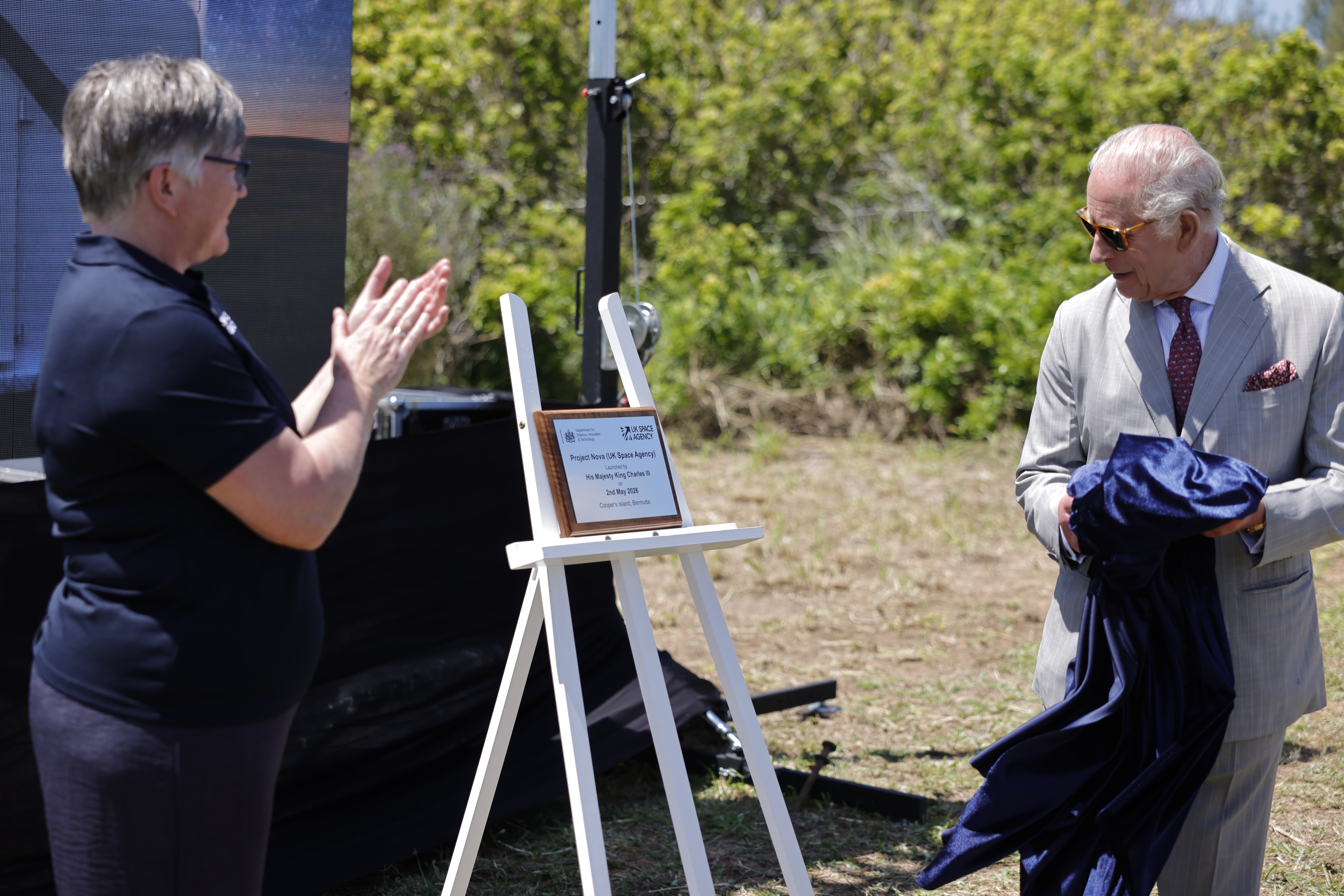
During The King’s visit to Bermuda, His Majesty visited the site which will be the first of the UK’s new global network of optical telescopes designed to protect the satellites that millions of people depend on every day.
The UK Space Agency plans to deploy 13 optical telescopes across five countries, as part of Project NOVA, enabling the UK to independently monitor satellites, orbital debris, and near-Earth objects including asteroids and comets.
With approximately 14,000 active satellites currently in orbit and as many as 100,000 expected by 2030, the risk of collisions is growing rapidly. A single collision could create thousands of pieces of debris, putting other satellites — and the services they provide — at risk.
Project NOVA sensors will track these hazards to provide early warnings, helping to prevent collisions that could render entire orbits unusable. The network will also improve the UK’s ability to predict where and when decaying satellites or debris will re-enter the atmosphere, significantly reducing the risk to life and property on the ground.
In 2022, The King announced an ambition for His Majesty’s Sustainable Markets Initiative to create a mandate, the ‘Astra Carta’, to act as a framework to inspire sustainability across the space industry. The Astra Carta aims to convene the private sector in creating and accelerating sustainable practices across the global space industry.
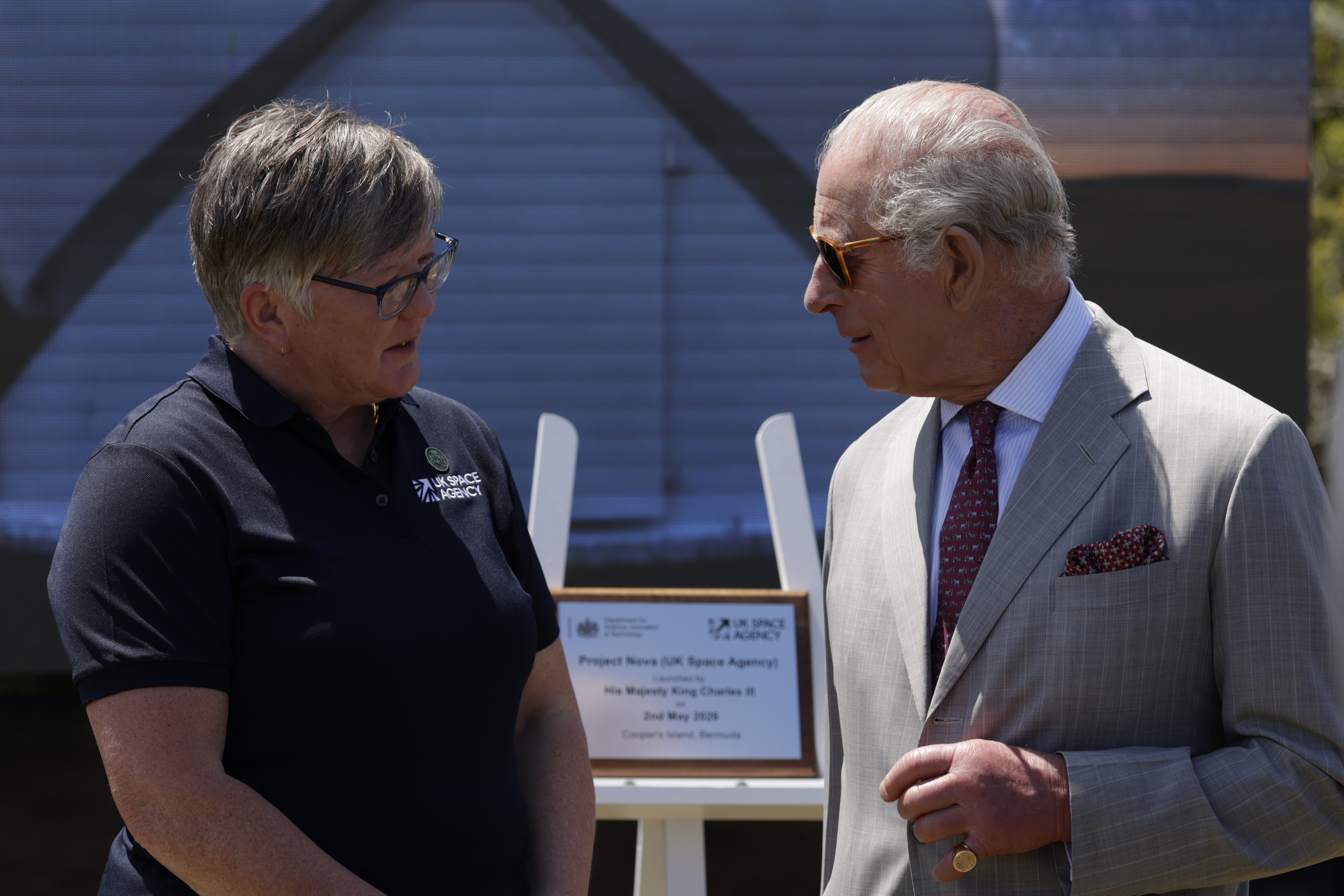
During the visit, His Majesty viewed a display showcasing the three telescopes that will be built at the Project NOVA site, receiving an overview of how the network supports the ambitions of the Astra Carta and the UK's efforts to mitigate space debris.
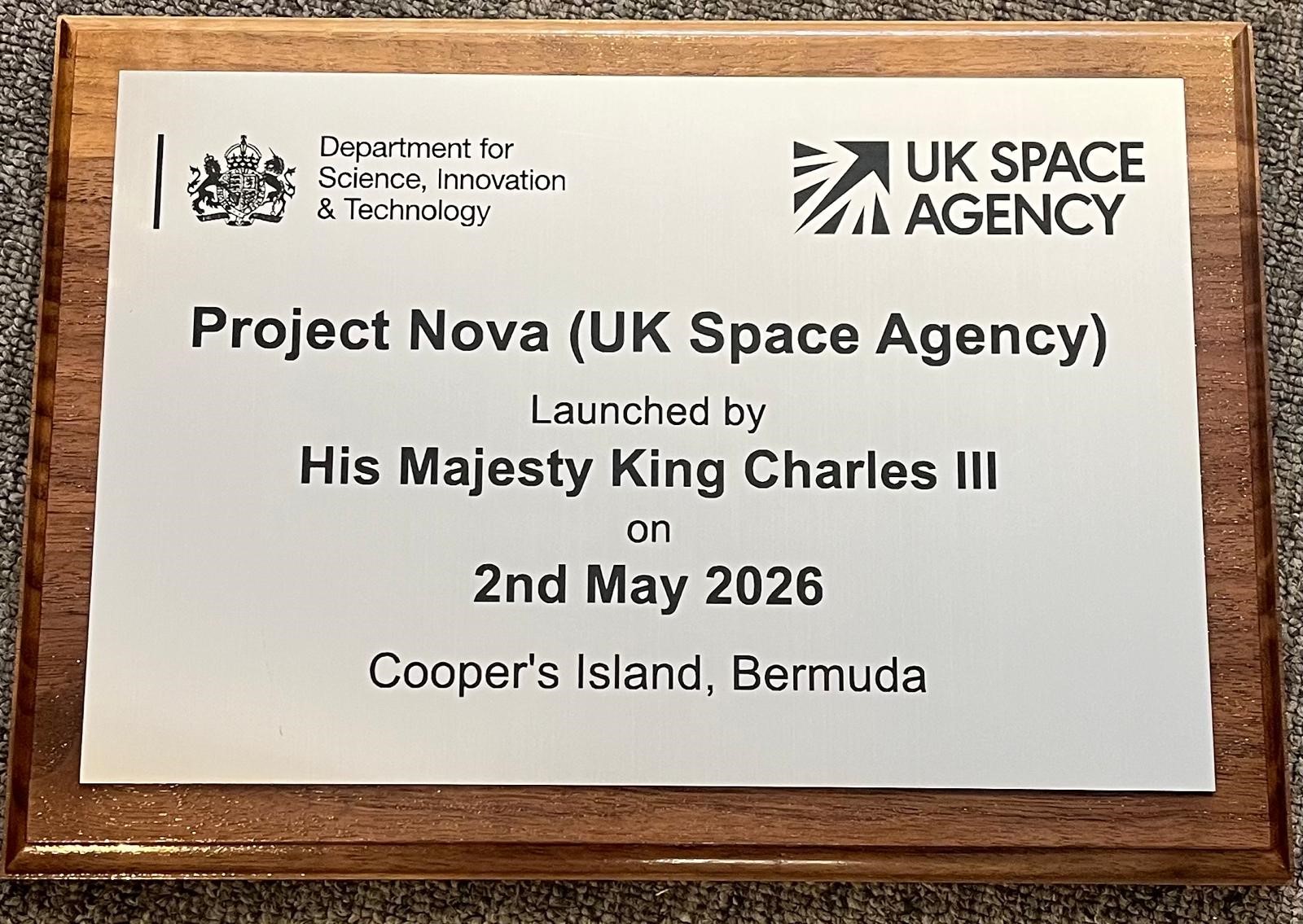
His Majesty then unveiled a commemorative plaque at the site, alongside an Astra Carta Seal, as a mark of the UK's commitment to sustainable space operations.
His Majesty also met with representatives from Odin Space, a UK start-up developing technology to detect and map lethal, non-trackable space debris, helping satellite operators, insurers, and governments better understand and respond to a threat that is invisible to existing tracking systems.
Space Minister Liz Lloyd said: “Space is becoming an increasingly challenging environment, and the UK must have an independent, sovereign view of what is happening up there. Every satellite we rely on — whether for communications, weather forecasting, navigation or national security — depends on our ability to monitor and respond to the thousands of objects now sharing that environment.
“This network will allow us to protect UK and allied interests and assets, guard against potential collisions, and ensure that the decisions we make are based on the best possible data. The UK is committed to keeping orbit safe and sustainable, and this investment demonstrates that commitment.”
Having sovereign sensors means the UK can independently detect, track, and identify orbital objects, protecting national interests without relying on third-party data. Space Domain Awareness is also a collective international effort — by establishing Project NOVA in Bermuda, the UK provides unique geographic coverage that fills critical gaps in the global sensor network, ensuring we are a contributor to space safety, not just a consumer.
The telescopes will also monitor the broader health of the orbital environment. By tracking and managing objects in orbit, the UK is helping to ensure that space remains a sustainable and accessible resource for future generations.
Each site will be equipped with AllSky Domes, developed in partnership with Baader Planetarium, providing environmental protection and enabling resilient, autonomous operations around the clock and in diverse conditions.
“Persistent visibility across the orbital environment starts with the right sensing infrastructure,” said Nik Smith, General Manager, Slingshot International. “Through Project NOVA, we are delivering optical sensors that enable independent tracking of objects across multiple space orbital regimes, helping the UK more fully understand space activity and protect our national interests in space.”
The UK Space Agency supports a space sector that generates £18.6 billion in annual income and employs 55,000 people across the country. This investment reinforces the UK’s position as a responsible and capable spacefaring nation, committed to keeping space safe and sustainable for future generations.
Funding of £4 million has been awarded to Slingshot Aerospace Ltd, a leader in AI-powered satellite tracking and space traffic coordination, to deliver the global network of optical sensors.
In March, Space Minister Liz Lloyd identified Space Domain Awareness as one of the UK Government’s key priority areas for driving economic growth and national security outcomes. Speaking at Space-Comm Expo, in London, Minister Lloyd announced £85 million in funding to develop the National Space Operations Centre, including £40 million to build a new ground-based sensing network, supporting the 24/7 requirement to protect satellites and manage an increasingly crowded space environment.
The locations of the remaining sites will be announced in due course.
Leave a comment